
VIX is meant to indicate investors' perception of the annual market volatility over the next 30 calendar days. The higher the value, the higher is the expected volatility and vice versa. VIX touched its historical peak of 85.13 on November 17, 2008, in the aftermath of the collapse of Lehman Brothers. In the past five years, it has stayed below 30.
Both indices are down nearly 9 per cent from their all-time highs in mid-January. A sharp reversal seems difficult this time as the peak impact of the virus is yet to play out.

At issue size of Rs 10,355 cr, the offering will be Asia's biggest this year and fifth-largest domestically.

The Budget has relaxed a few safe harbour rules that aim to make it easier for fund managers overseeing offshore India-focused funds to relocate to the country.
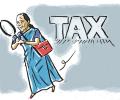
India is often viewed as an aggressive tax jurisdiction by domestic and overseas taxpayers, and making the charter as part of the Act may help restore confidence among taxpayers.

The government holds 90 per cent stake in ITI which is valued at Rs 7,550 crore.

The Street was hoping that investors will lap up shares of high-dividend companies on optimism that their payouts will increase further, thanks to the 20 per cent tax saving. However, the trade failed to materialise as wealthy investors stayed away fearing high tax outgo, and experts raised doubts on whether companies would actually increase cash dole outs.

The regulator has asked portfolio managers not to leverage the portfolio of clients for investment in derivatives and not indulge in speculative transactions that are not accompanied by actual delivery, except for derivatives trades. This is done with the intention of reducing volatility in the market and curbing undue risks.

In May 2019, Sebi had penalised the NSE as well as two of its former heads - Narain and Chitra Ramkrishna - for allowing Sampark to provide the dark fibre connectivity to stock brokers, despite not having the authorised licence. Dark fibre refers to an unused optical fibre used for high-speed connectivity.

Last October's circular meant that downstream investment by such funds by way of subscription or acquisition of shares would have been considered "indirect foreign investment" if their investment manager or sponsor is owned or controlled by a non-resident. The finance ministry has now said that mutual funds that invest more than 50 per cent in equity shall be omitted from the Securities and Exchange Board of India (Mutual Funds) Regulations, 1996.

'Trading is about psychology; 75% of it is about keeping your emotions in check.'

The companies that have seen sharp erosion of market wealth include YES Bank, Indiabulls Housing Finance, Zee Entertainment, Vodafone Idea, and Bharat Heavy Electricals.

The asset manager is yet to resolve the impasse surrounding the payment of pension to its erstwhile employees who had opted for voluntary retirement in 2003.

BMA's clients allege that depository firm CDSL and stock exchanges did not act on their complaints, prompting them to protest before Sebi. They say their shares have been transferred to a pool account without their knowledge and have been used to avail loans. Clients alleged that BMA has pledged their securities with a leading private bank, who could have sold their holdings.

Some of the firms that have witnessed major drop in analysts' coverage include Dish TV, YES Bank, and JSW Energy.
The financial services sector, including NBFCs and housing finance companies (HFCs), have historically been the largest borrowers from MFs.

Market watchers believe that the change in guidelines fly in the face of some of the recent initiatives taken by the government, such as easing norms for foreign portfolio investors.

The issue will comprise a secondary share sale worth Rs 600 crore by private equity major Everstone Capital and fresh fundraising worth Rs 400 crore.

This may mean easier access, simplified KYC and documentation requirements, and fewer investment restrictions for a majority of FPIs, especially broad-based funds and pooled vehicles that were earlier part of Category-II.

While FIIs have pumped in nearly Rs 17,000 crore, MFs have been net buyers to the tune of Rs 9,000 crore.
 © 2026 Rediff.com - Advertise with us - Disclaimer - Privacy Policy - Sitemap - Feedback - About us - Terms of use - Grievances